Jagadish Pendyala AI Product Builder Email me

Vijayawada, India · open to remote work

I think in systems, plan like a strategist, and build with AI.

I’ve led teams since I ran my college music club, and solved problems for startups ever since, some of them mine and some of them friends’. The work never changed: find what’s broken, design the system, get the team behind it. Now I build those systems myself, with AI, and I’m looking for a remote team that needs that.

The evidence, unsorted.

Sort by
  1. ₹1.12 Cr

    of interiors projects won in total (≈ US$130k). I ran the money on them: quote, work orders, staged advances, final bill.

    Systems and strategy. Arha Interiors · 2025

  2. 210

    shopkeepers surveyed in person before a single screen of the product was designed.

    Strategy. Retail-growth startup · 2025

  3. 841

    payments logged through an ops pipeline I set up on Google Forms, alongside 395 deliveries and 105 expenses.

    Systems. Fitree café · 2024–25

  4. ₹47.6 L

    in receipts from about 386 customers over 13 months (≈ US$55k) at a subscription meal café.

    Strategy. Fitree café · 2024–25

  5. One idea

    “India isn’t slow at adopting technology. It’s slow at owning it.” The thesis a company was built on.

    Strategy. Retail-growth startup · 2025

  6. Honest = easy

    A field-survey app designed so the true answer is always the quickest one for a surveyor to give.

    Systems and strategy. City mapping platform · 2026

  7. 5

    genuinely different design directions shown to one client before the final site was built.

    Strategy and build. Client website · 2026

  8. 1 → 254

    One source file generates a whole identity: 254 logo files, a 50-page brand book, the website and print.

    Systems and build. Studio Pi · 2026

  9. 0 images

    stored, by design. A test fails the build if any code path could save a frame or a face.

    Systems and build. Vision software · 2026

  10. 79.5% → 99%

    accuracy on Indian faces. The stock model fell short, so I trained my own. Benchmark result; field test next.

    Build. Vision software · 2026

  11. 33

    automated design checks on a hardware enclosure. The CAD export refuses to run if any one of them fails.

    Systems and build. Street-screen device · 2026

  12. 132,000

    points in a live 3D scan on a client’s website, drawn with 7.8 KB of JavaScript and no 3D library.

    Build. Client website · 2026

Twelve facts, picked from a lot more work. Sort them.

Selected work

Five pieces. For each one: what it is, what I decided, and where it stands today.

Hardware + edge AI · 2026

A street screen that counts people without ever keeping a face

A portrait ad screen for small shopfronts. It measures the street: footfall, attention, rough age band. Only anonymous counts ever leave it. I designed and specified it for the retail-growth startup I founded, and built it with Claude Code.

What I decided

  • Hardware designed in code. A parametric CAD model that will not export unless 33 checks pass: clearances, wall thickness, every part watertight.
  • Thinner than the reference. 47 mm deep against the 61.6 mm panel it was benchmarked on, with separate cooling chambers for the computer and the display.
  • Privacy as an engineering rule. Per-minute anonymous counts only. A test fails the build if any code path could write pixels.
  • Didn’t settle for the stock model. It scored 79.5% on Indian adult faces, so I trained a replacement. It scores 99% on the benchmark.

Where it stands CAD complete · software verified in a simulator · first hardware trial next
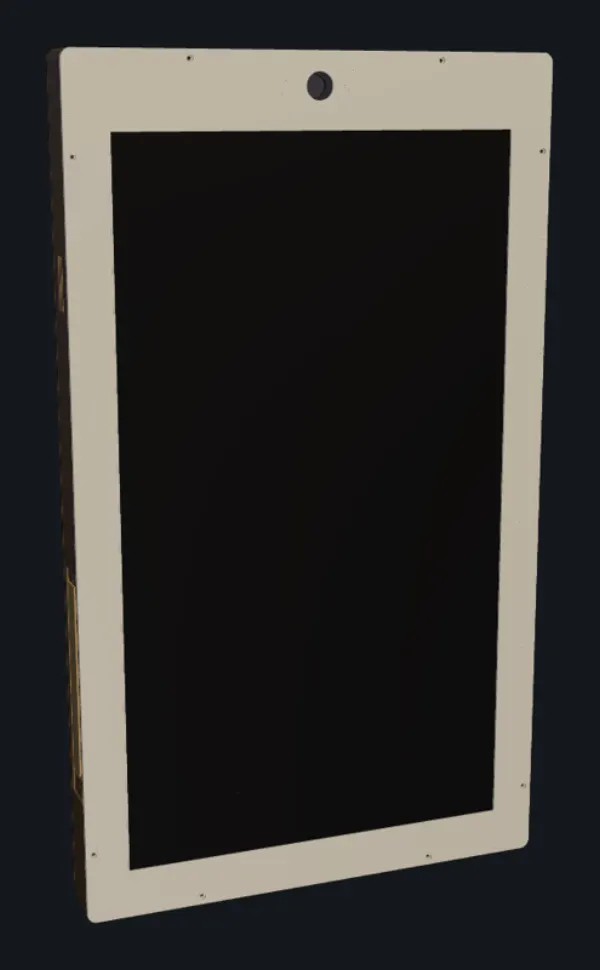
Render of the portrait street screen: a slim cream frame around a black display, with a small camera opening at the top.
The body: 409 × 699 × 47 mm.
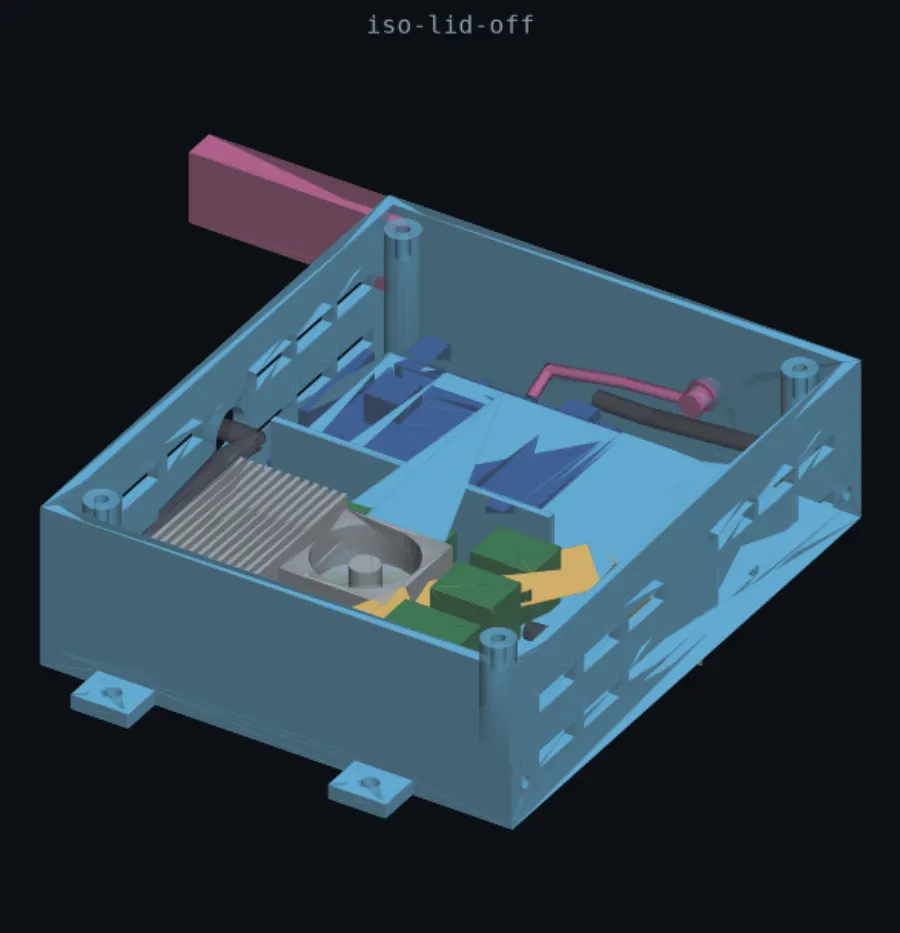
CAD render of the enclosure with the lid off, showing the Raspberry Pi, cooler and cable routing.
Lid off: computer, cooler, cable runs.
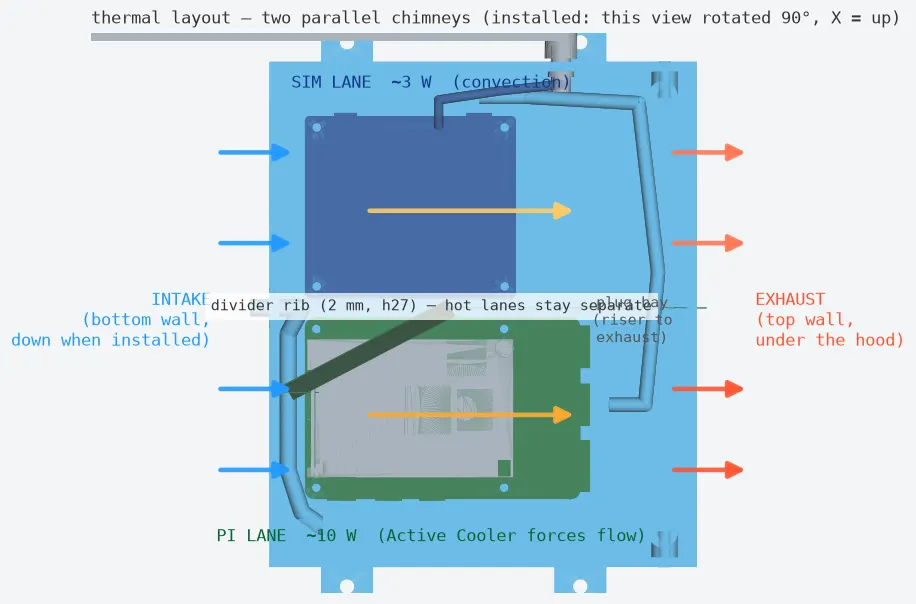
Thermal layout diagram: two parallel air chimneys, the modem lane at about 3 watts and the computer lane at about 10 watts, with intake and exhaust arrows.
Thermal plan: two chimneys, hot lanes kept apart.

Personal project · Jul–Oct 2026

ITUKA: a visual workspace for planning and tracking work

I built ITUKA out of my own interest: a shared canvas where goals, tasks and blockers become simple symbols, so anyone can see where things stand at a glance. ఇటుక means “brick” in Telugu: small bricks build the great building.

What I decided

  • Its own visual language. Twelve symbols: a brick is a goal, a cube is a task, an octagon is something blocked.
  • History you can trust. Every change is permanently recorded, so the history can’t be quietly edited.
  • Private by default. Several people can edit at once. The AI runs on the machine, not in the cloud, and asks before it changes anything.
  • A clear position. Don’t try to out-feature ClickUp; be the simple, opinionated, India-first tool.

Where it stands Personal project · working build · not public yet

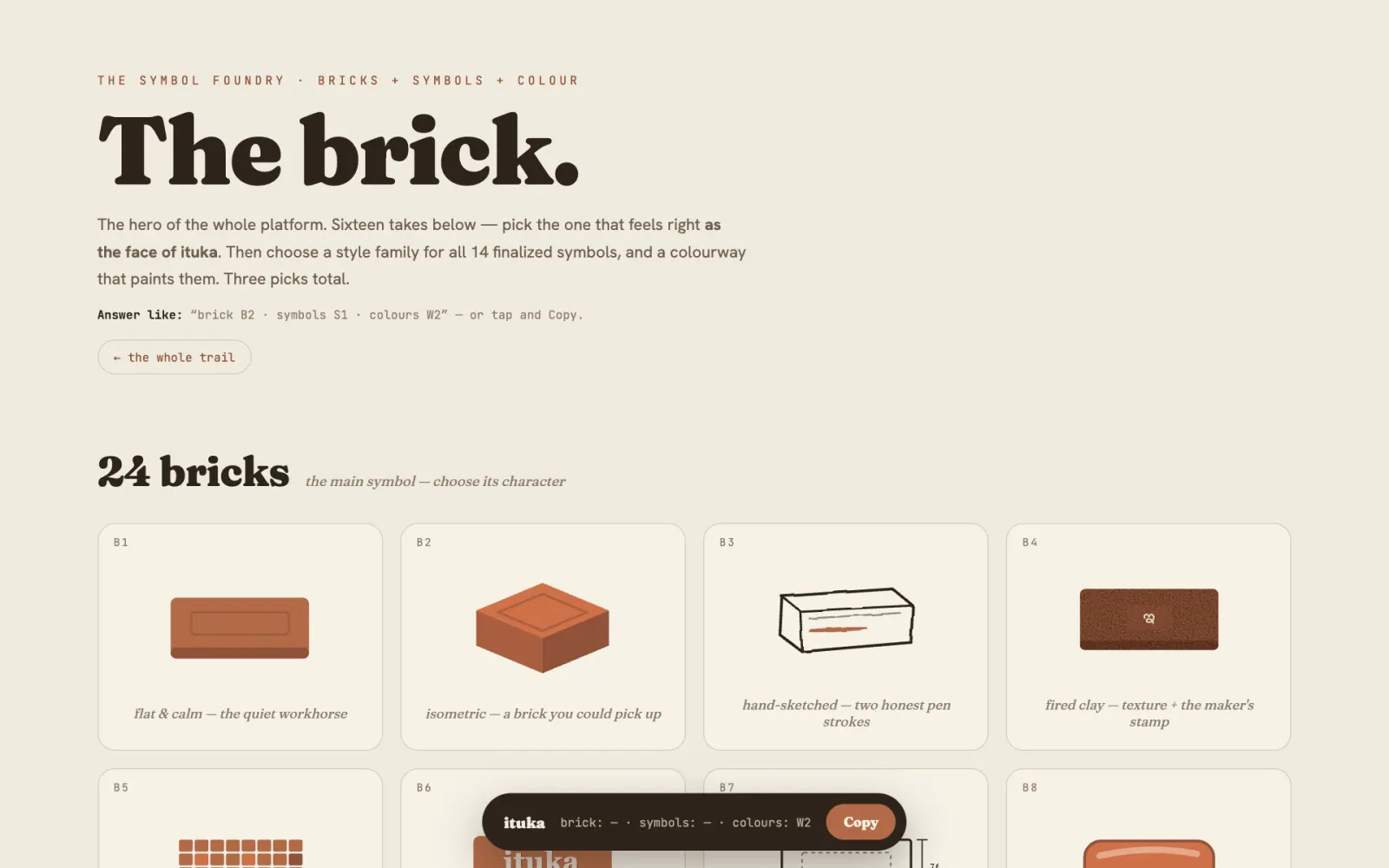
ITUKA symbol foundry page titled ‘The brick.’, showing a grid of brick symbol variations in terracotta.
The symbol foundry: 24 bricks, one chosen.
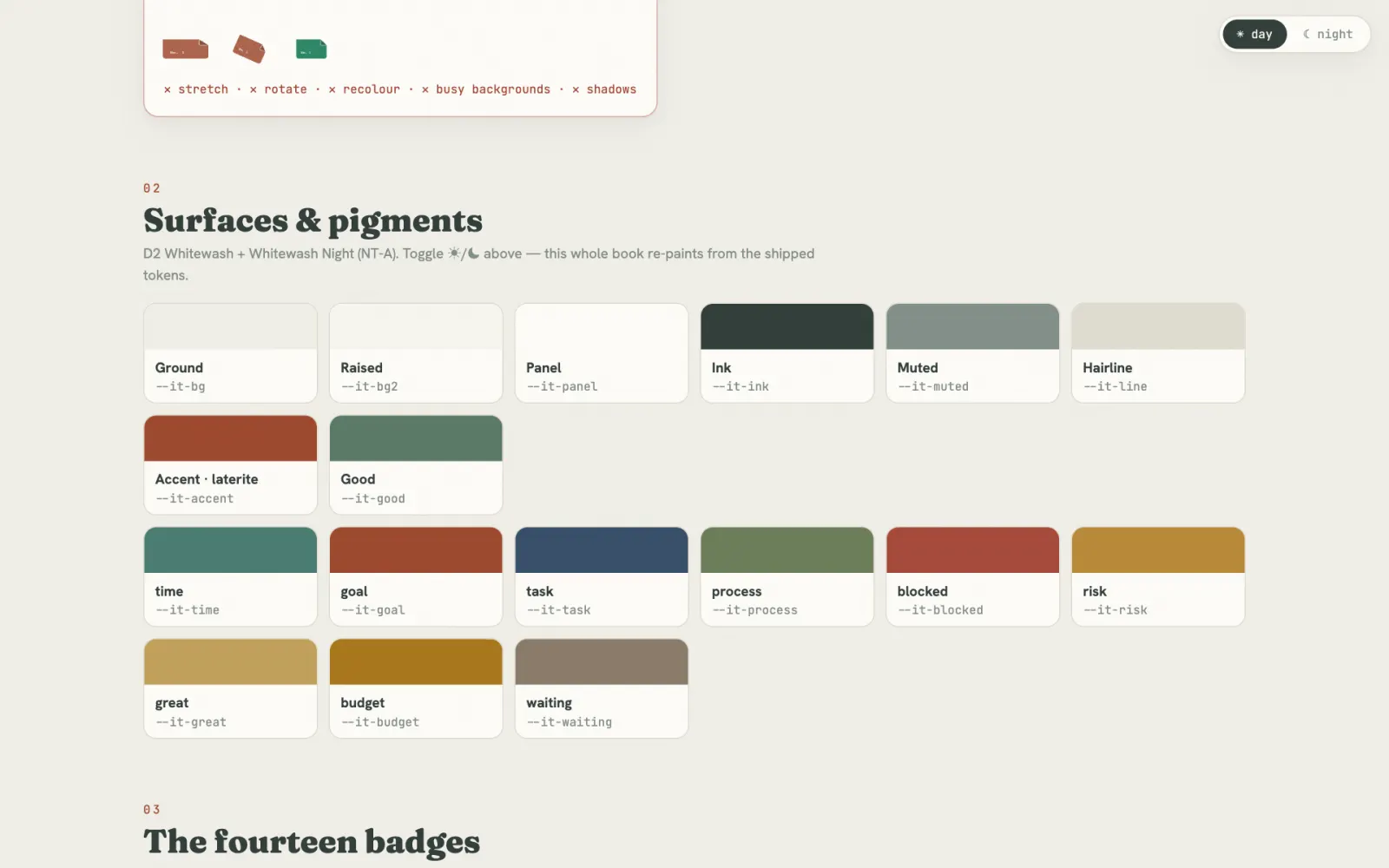
ITUKA brand book page ‘Surfaces and pigments’: colour swatches for ground, ink, accent and one colour per status.
Brand book: one colour per state, never colour alone.

Operations · 2024–25

Fitree: running a subscription café on systems the team actually used

A healthy-meal subscription café in Vijayawada. I joined as business strategist. The job was to make the numbers visible without buying software the team wouldn’t use.

What I built

  • Pipelines on Google Forms and Sheets. Every payment, delivery and expense was logged by the person doing the work.
  • A daily feedback loop. Customer calls every day, with each complaint routed to a named team.
  • Pricing and growth models. A four-plan subscription matrix (₹4,500–11,700 a month) and a franchise model with a 12–18-month break-even.

Result ₹47.6 lakh (≈ US$55k) in receipts from ~386 customers over 13 months. The tracker also made the hard problem visible: retention.

Interactive explainer · Jul 2026

FLOW: how money moves through a local economy

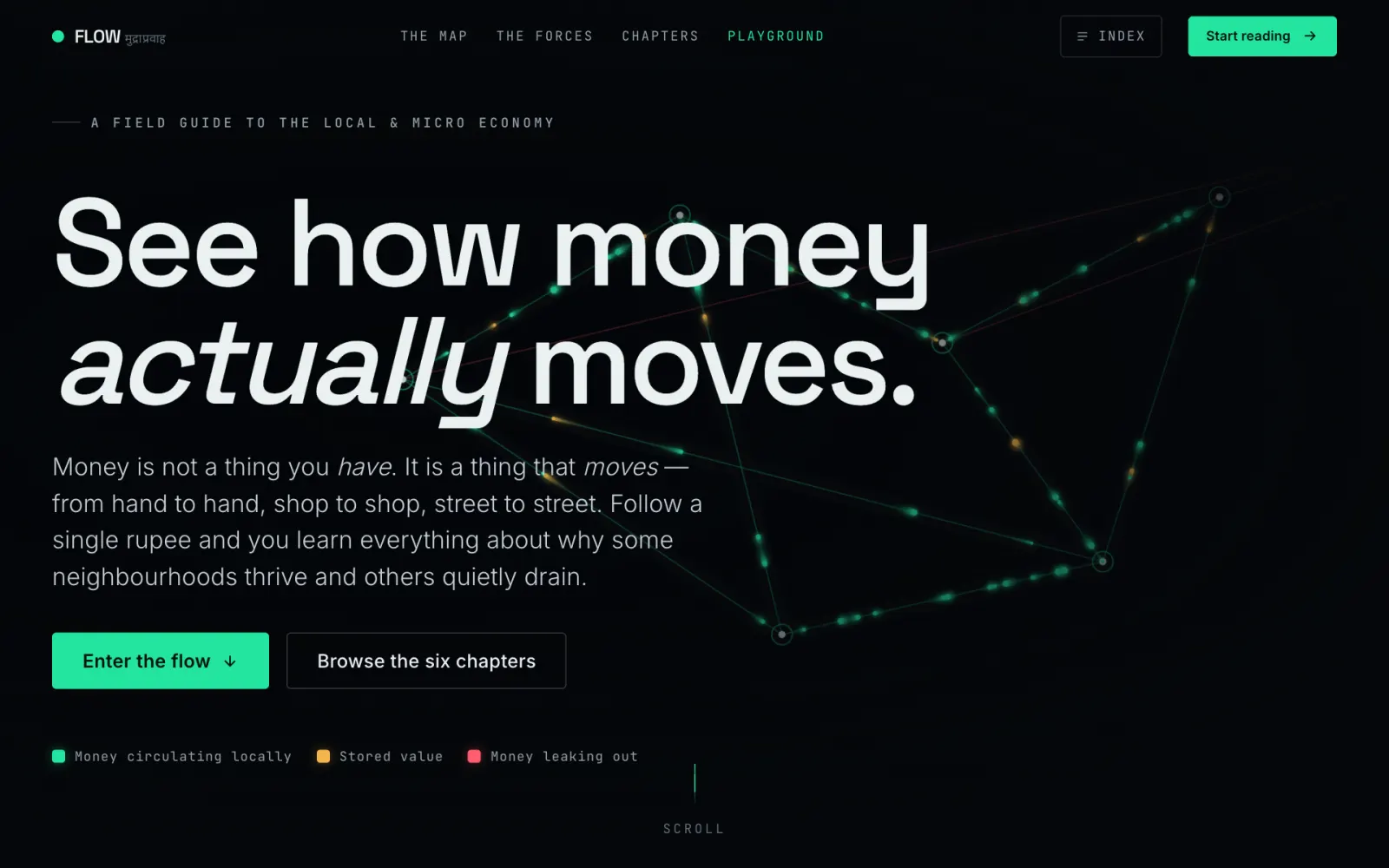
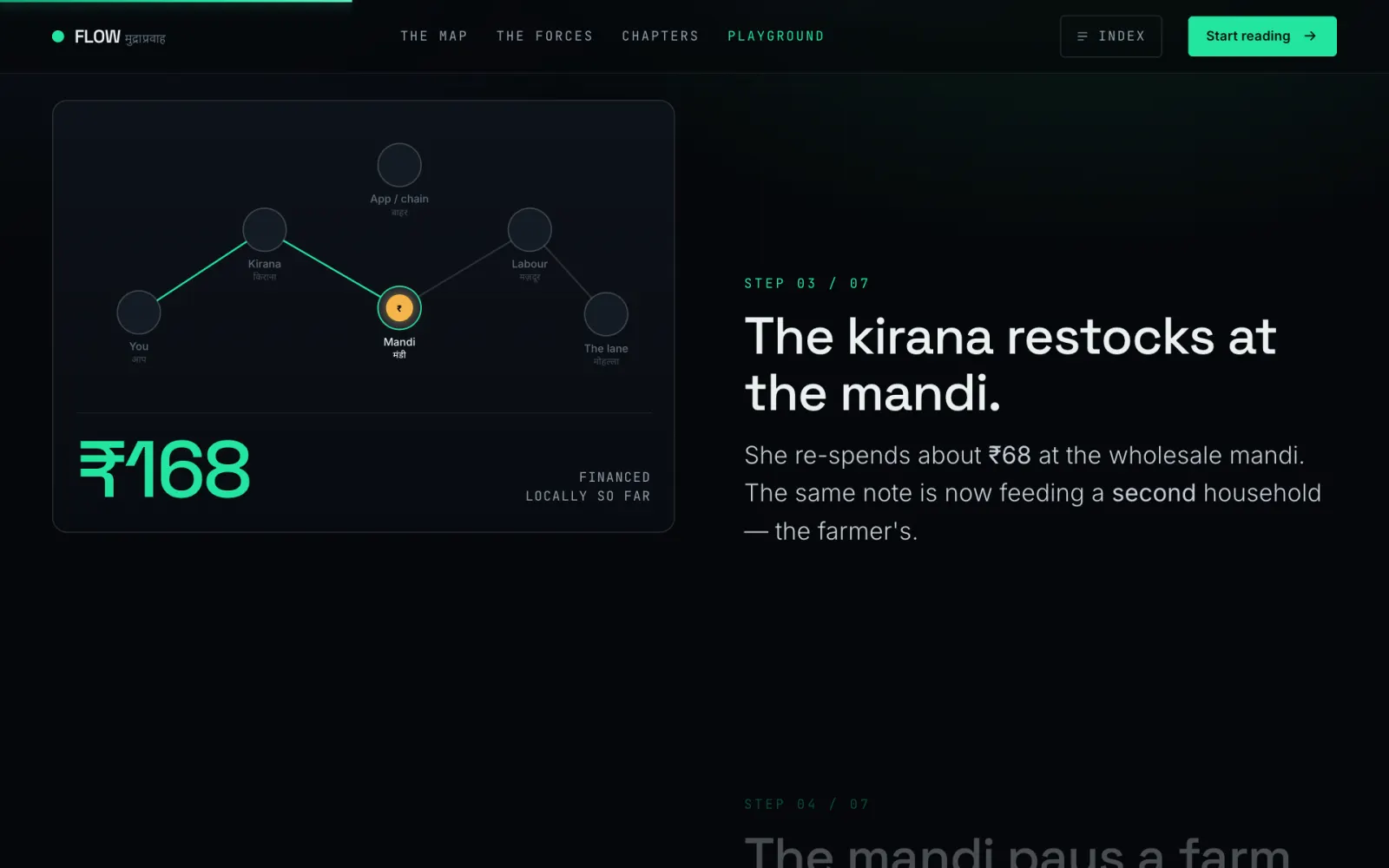
An interactive field guide. Follow one ₹100 note around a neighbourhood and watch the local multiplier happen: the same note pays the corner shop, the wholesale market, the farmer and the barber.

What I decided

  • One idea, six chapters. Every chapter returns to the same question: does the money stay or leak?
  • A playground, not just prose. You can simulate a street on a real map of Vijayawada.
  • Two readers at once. Written so a shopkeeper and an investor can both follow it.

Where it stands Live · open FLOW

FLOW homepage: ‘See how money actually moves’ in white on a dark background with a faint network of glowing nodes.
The front door.
FLOW chapter: a node network showing one ₹100 note has financed ₹245 of local activity after four neighbours.
One note, four neighbours: ₹245 of activity.

Identity system · Sep–Oct 2026

Studio Pi: an identity that builds itself

The identity for my design and build studio, made as a system rather than a set of files. One source file outputs every logo, a 50-page brand book, the website, social posts and print-ready cards.

What I decided

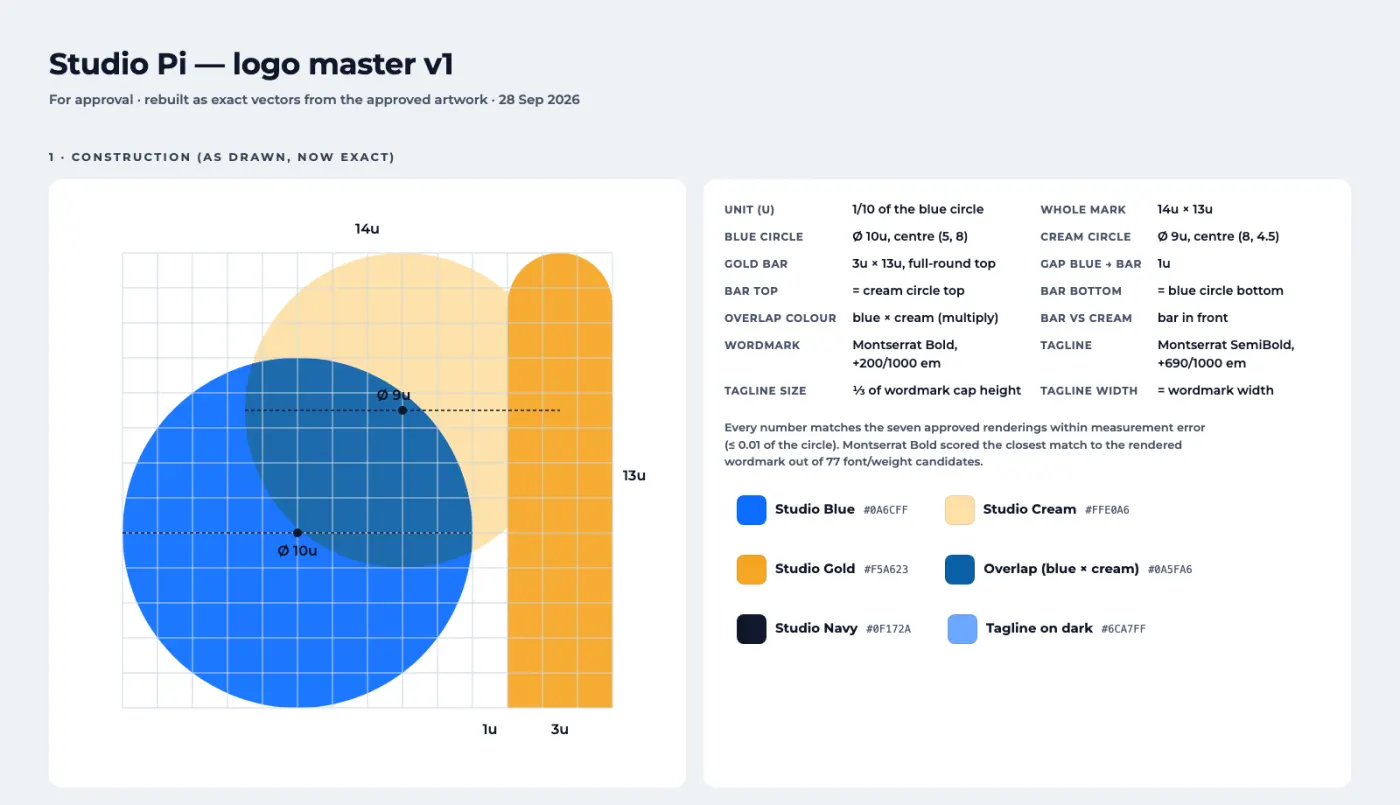
  • Measured, not eyeballed. The logo was rebuilt with exact measurements to match the approved artwork, so it looks the same everywhere.
  • Accessible by rule. Every colour pair is contrast-checked, and the book carries the table.
  • Four sites before one. Four genuinely different website concepts, each tested at phone, tablet and desktop widths.

Where it stands Identity v1.0 complete · rolling out across web, social and print

Studio Pi logo construction sheet: a blue circle, cream circle and gold bar on a measured grid, with a table of exact dimensions and brand colours.
Logo master: construction and exact values.

More work

This is a small part of what I’ve built, run and fixed over the years. Ask me about the rest, and I’ll happily walk you through it.

Before AI, I ran things

Kitchens, bands, festivals, weddings, interiors. None of it was glamorous, all of it was real. It is why what I build makes business sense.

  1. 2014–18

    B.Tech, Electronics & Computer Engineering

    KL University, Andhra Pradesh. Head of Swara, the university music club, in my final year (2017–18).

  2. 2019–20

    Co-founder, Cluster One Food Works

    A cloud kitchen running five food brands from one central kitchen: hub and spoke, no extra rent.

  3. 2019–23

    Lost Nomads

    Band and artist management: bookings, contracts, budgets and live shows.

  4. 2021–23

    Student mentor, KL University

    Mentored student clubs and helped organise Raaga, a national-level music festival.

  5. 2021–24

    Co-founder, FIME

    Event operations: weddings, corporate and campus events, with crews of up to 37 people.

  6. 2022–

    Founder, Studio Pi

    Design, brand and build for founder-led businesses.

  7. 2024–25

    Business strategist, Fitree

    Ops systems, pricing and the franchise model for a meal-subscription café.

  8. 2024–25

    Business strategy consultant / business development, Arha Interiors

    Sales, quoting and project money for home and developer fit-outs.

  9. 2025–

    Founder, retail-growth startup

    Street screens for small shops, and a way to measure the street they face.

How I solve a problem

  1. Diagnose

    I find out what’s actually broken: how critical it is, why it happened, and what product or service it sits inside. I start by listening to the founder or stakeholder and taking in everything they know.

  2. Design

    Then I take time alone to think it through and come up with solutions. I walk the founder through the options, and if there’s a team, I sit with them and we shape the plan together.

  3. Build

    I pitch the final plan, and once it’s agreed, I make it happen. Today that often means building it myself with AI.

  4. Compound

    I build things to keep working long after launch. I judge my work by what it leaves behind, not by how it looks on day one.

Ways to work together

It’s in Vijayawada.

India Standard Time (UTC+5:30), and I’ll work your hours.

Got a messy problem? Send it over.